
Common Tire Killer types include embedded, screw-on, and portable; drive modes include manual and automatic; and functions include one-way and two-way.
Customers can choose the appropriate model based on their usage scenario (long-term/temporary, safety level, and budget).
Tire Killers can be categorized as follows based on installation method, drive mode, and usage scenario:
1. Classification by Installation Method
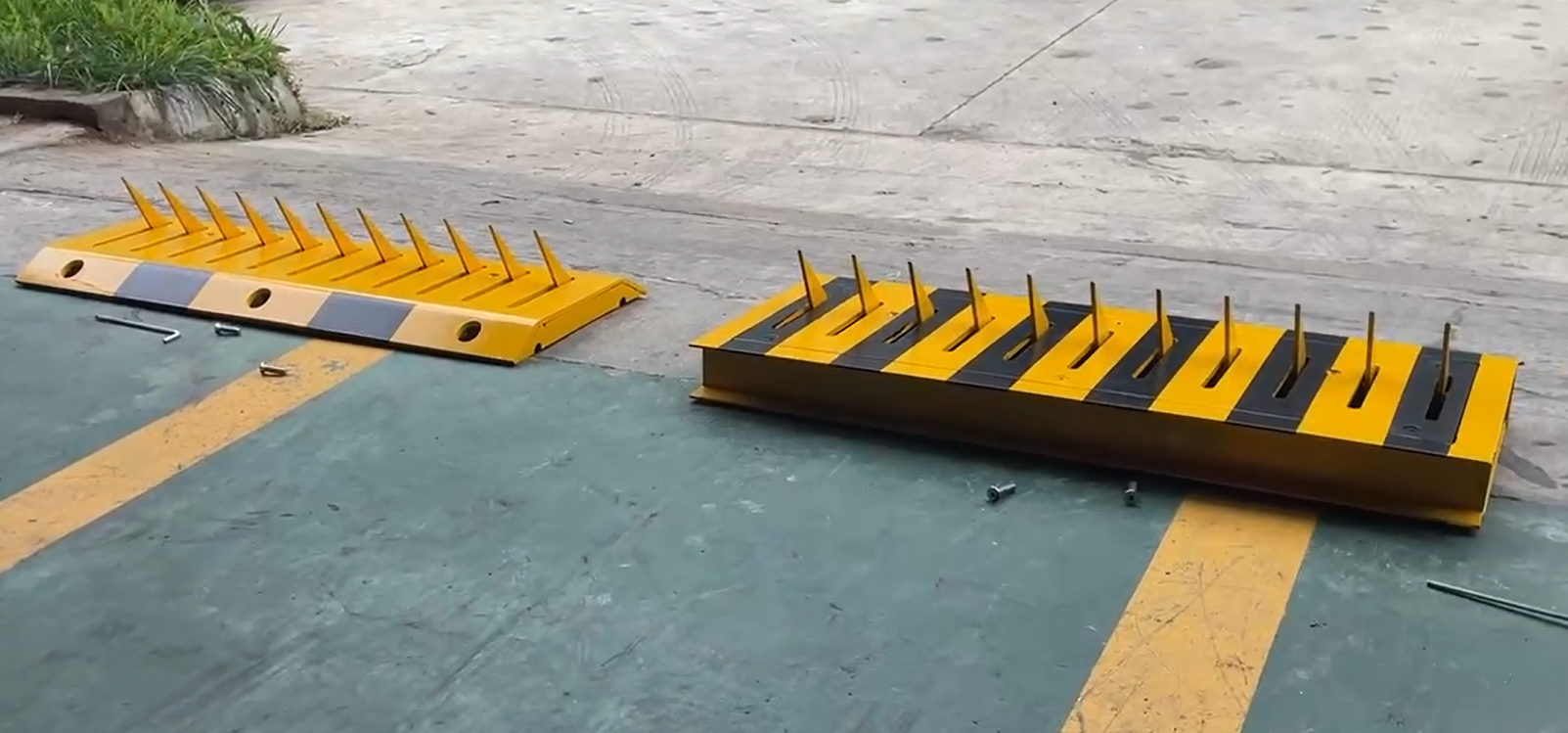
Embedded Tire Killer
Requires a slotted hole and buried flush with the road surface.
Suitable for long-term, stable, and durable installation.
Screw-on Tire Killer
Fixed to the ground with expansion screws for easy installation.
Suitable for temporary or low- to medium-intensity access control.
Portable Tire Killer (Mobile)
Can be rolled up or folded, making it lightweight and easy to carry.
Commonly used at temporary checkpoints, emergency response, and police enforcement.
2. Classification by Drive Mode
Manual Tire Killer
Requires manual lowering and stowing.
Low-cost, suitable for locations with infrequent operation.
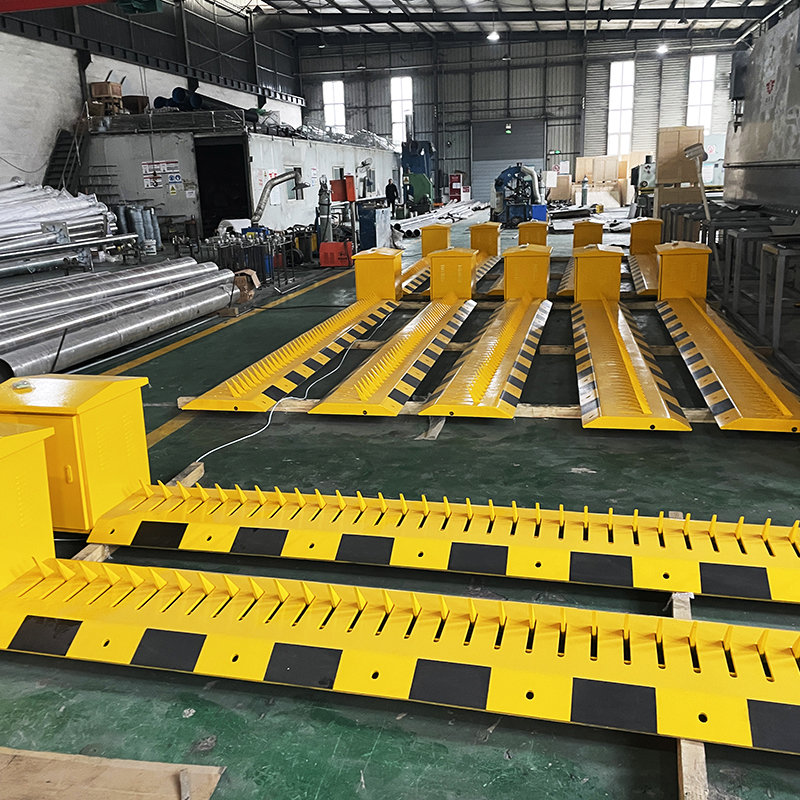
Automatic Tire Killers (Electric/Hydraulic/Pneumatic)
Can be linked with barriers, bollards, roadblocks, and other devices.
Commonly used in high-security areas such as parking lots, airports, and government buildings.
3. Classification by Structural Type
One-way Tire Killer
Allows vehicles to pass in one direction only, puncturing tires in the opposite direction.
Commonly used at parking lot entrances and exits, toll booths, and other locations.
Two-way Tire Killer
Capable of puncturing tires in both directions, suitable for two-way lane control.
4. Classification by Application Scenario
Fixed Road Control Type: Long-term installation, suitable for high-security units.
Temporary Control Type: Foldable and movable, suitable for public security, military, and inspections.
Parking Lot/Residential Area Type: Often linked with barriers to prevent vehicles from driving the wrong way or evading tolls.
If you have any purchase requirements or any questions about the Tire Killer, please visit www.cd-ricj.com or contact our team at contact ricj@cd-ricj.com
Post time: Sep-02-2025


