
A parking lock is designed to reserve and protect a parking space, but because it is installed directly where vehicles operate, accidental contact can sometimes occur.
This raises an important question: Can a parking lock prevent vehicle damage?
The answer depends on the type of parking lock and how it responds when it encounters a vehicle. For automatic models, resistance protection can help reduce the risk of continued pressure during operation.
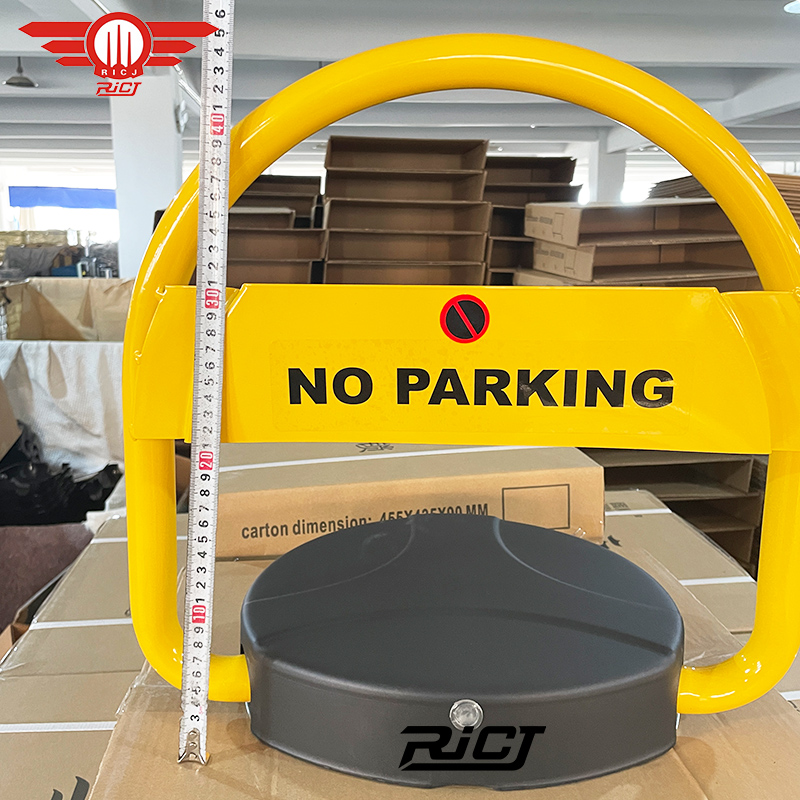
What Happens When a Parking Lock Meets Resistance?
An automatic parking lock normally raises or lowers according to a command from the remote control. If an external object creates resistance during this movement, continuing to operate normally could put unnecessary pressure on the obstruction.
A parking lock with resistance protection is designed to respond differently.
For the RICJ automatic parking lock, when external resistance is encountered during the rising process, the barrier can lower itself rather than continuing to push against the obstruction.
This feature is particularly useful when a vehicle is incorrectly positioned or comes into contact with the barrier during operation.
Does This Mean the Parking Lock Is Crash-Rated?
No. This is an important distinction.
A parking lock with resistance protection is designed to reduce the risk of vehicle damage during operation. It should not be considered equivalent to a crash-rated bollard or road blocker designed and tested to stop moving vehicles.
| Product | Primary Purpose |
|---|---|
| Parking Lock | Reserve and protect an individual parking space |
| Security Bollard | Protect people, buildings, and restricted areas |
| Crash-Rated Bollard | Resist tested vehicle impact |
| Road Blocker | Control and physically block vehicle access |
If the main concern is unauthorized parking, a parking lock is appropriate. If the project requires protection against deliberate or high-speed vehicle impact, a tested vehicle security barrier should be considered instead.
Why Resistance Protection Matters for Daily Parking
Vehicle contact does not always happen because of a serious accident. A driver may:
1. Misjudge the parking position
2. Activate the remote at the wrong time
3. Approach the parking lock too closely
4. Fail to notice the barrier
These are everyday operating situations rather than high-speed impact scenarios. Resistance protection provides an additional safeguard by allowing the parking lock to react when unexpected force is detected.
Positioning Still Matters
Product protection starts with correct placement. For this type of parking lock, installation is generally recommended around one-third of the parking space from the entrance, depending on the layout.
Visibility Is Part of Parking Safety
A parking lock should be easy for drivers to recognize. Reflective elements, suitable lighting, and clear parking-space markings can help make the barrier more visible, particularly at night.
What Should You Check Before Buying?
| Check | Why It Matters |
|---|---|
| Resistance protection | Helps the mechanism respond to unexpected force |
| Structural design | Determines overall durability |
| Mounting system | Keeps the unit securely positioned |
| Visibility | Helps drivers recognize the barrier |
| Impact certification | Important when actual vehicle-impact resistance is required |
Parking Lock Safety in Different Applications
For a private residential parking space, the main concern is usually preventing unauthorized parking and avoiding accidental contact. For a commercial or managed parking area, frequent operation and visibility may become more important. For high-security facilities, the requirement changes completely.
RICJ Parking Lock Solution
RICJ's automatic parking lock combines remote-controlled operation with a resistance-response function designed to help reduce continued pressure when external resistance is encountered.
Tell us your parking application and requirements to get a suitable parking lock recommendation.
Post time: Sep-15-2026


