
A pole designed for one location may need a different configuration at another. For project buyers, the priority is to ensure that the proposed flagpole, foundation, and lifting system match the intended installation conditions.
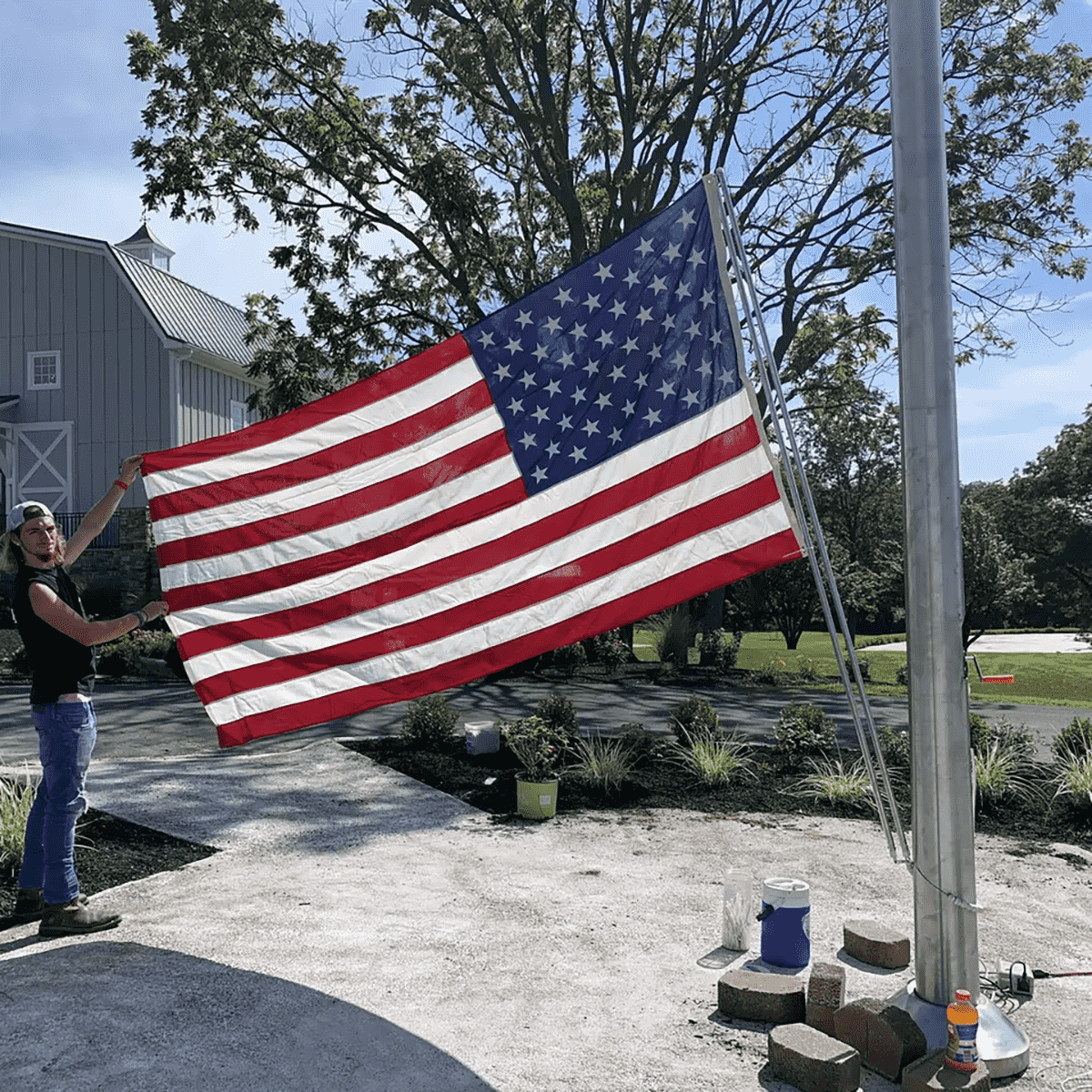
Quick Checklist: What Buyers Should Verify
Before selecting an automatic flagpole, confirm the following:
| Project item | What to verify |
|---|---|
| Flagpole configuration | Required height, shaft dimensions, and mounting arrangement |
| Flag specifications | Maximum flag dimensions and intended operating conditions |
| Wind design | Site design wind speed, applicable code, and exposure assumptions |
| Foundation | Footing design, anchorage, and ground conditions |
| Outdoor environment | Corrosion exposure, drainage, and temperature limits |
| Technical documentation | Design information, installation drawings, and operating instructions |
Use this checklist to identify missing project information before comparing supplier quotations.
1. Match Flagpole Height to Flag Size
Flagpole height and flag size should be considered together during project planning. Wind acting on the exposed pole and flag creates forces that must be resisted by the structure and transferred through the mounting arrangement into the foundation.
A taller pole can experience greater bending demands, while a larger flag generally presents more area to the wind. The actual structural demand also depends on wind conditions, pole geometry, flag configuration, and the relevant design assumptions.
When reviewing a supplier's proposal, confirm the overall pole height, exposed height, shaft diameter, wall thickness, taper, and mounting method. Specify the maximum flag dimensions at the same time rather than selecting the pole first and deciding on the flag later.
For example, if a project changes from a smaller flag to a substantially larger one after the initial specification, the original design assumptions may no longer be suitable. The proposed configuration should be reviewed before procurement or installation proceeds.
2. Verify Site Wind Loads and Exposure Conditions
Wind resistance must be evaluated for the installation location. Design wind speed, surrounding terrain, topography, and exposure conditions can influence the wind loads used for structural design.
An exposed site near the coast, an elevated location, and an urban site surrounded by buildings may experience different wind conditions. Nearby buildings should not automatically be treated as reliable wind protection because exposure can vary with wind direction and local site geometry.
Ask the supplier or project engineer to identify the design wind speed, applicable design code, and relevant assumptions used for the proposed configuration.
For U.S. projects, ASCE/SEI 7-22 provides design-load criteria that include wind loads, exposure, and topographic effects. The applicable edition and local code requirements should be confirmed for each project. Other locations should follow the relevant local design requirements.
When comparing suppliers, make sure their stated wind-resistance figures refer to comparable conditions. A wind-speed value without a clearly defined design basis may not be sufficient to establish suitability for a particular site.
3. Check the Foundation and Mounting Design
The foundation is an essential part of a flagpole's structural system. Wind loads acting on the pole create forces and overturning moments that must be transferred safely through the mounting arrangement into the supporting ground.
The appropriate foundation depends on the pole configuration, design loads, anchorage method, and ground conditions. Relevant details may include:
- Foundation dimensions and concrete requirements.
- Reinforcement and anchor-bolt arrangements, where applicable.
- Embedded sleeves or anchor-base mounting details.
- Soil conditions and the available supporting structure.
A flagpole with an appropriate structural design may still be unsuitable for a proposed installation if the foundation, anchorage, or ground conditions have not been adequately assessed.
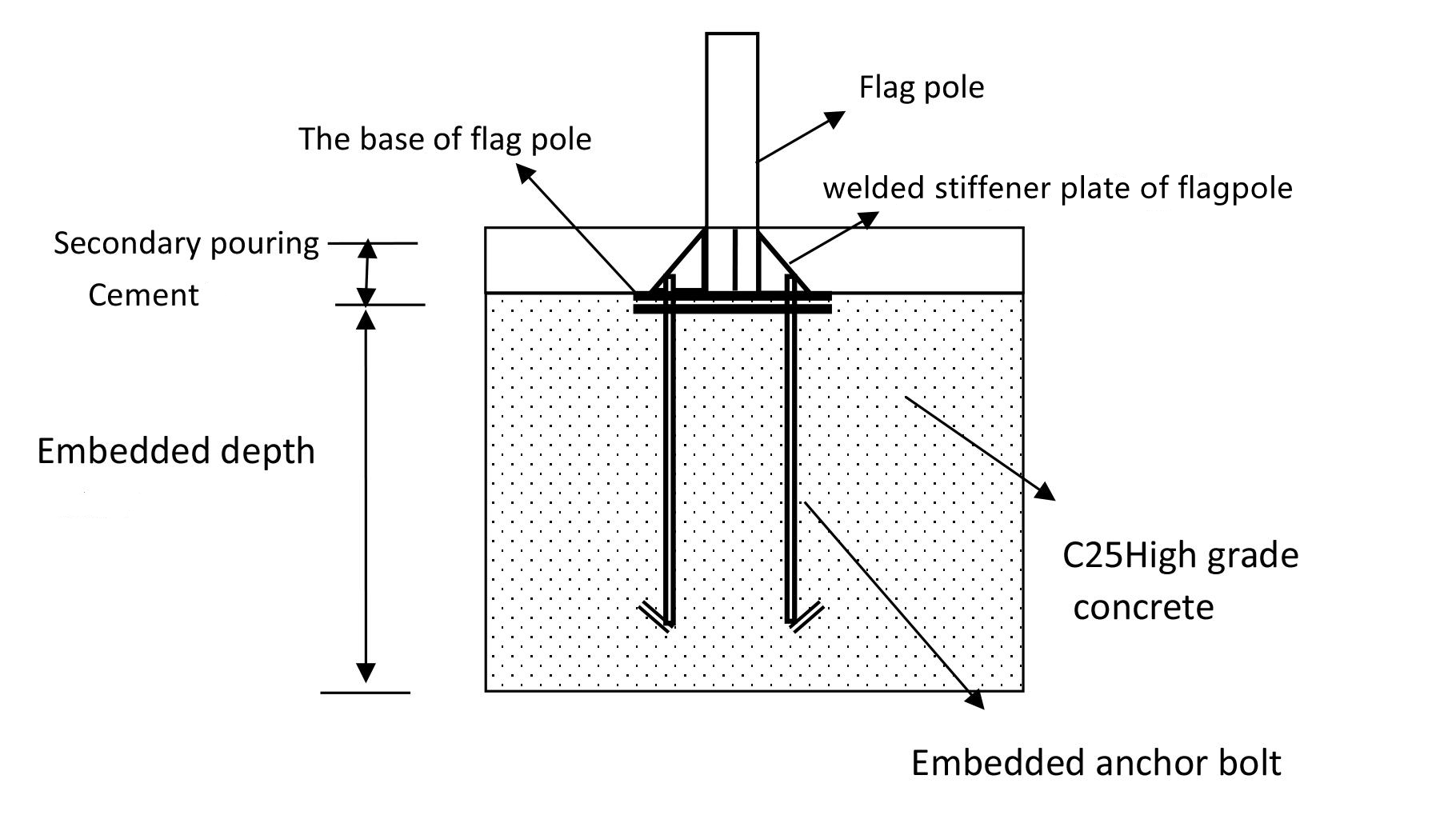
For example, installing a pole on an existing concrete slab should not be assumed acceptable simply because the slab appears substantial. Its thickness, reinforcement, anchorage, and capacity to transfer the required loads need to be verified.
Compare the supplier's installation drawings with the actual site drawings and ground conditions before construction. Where necessary, have the foundation design reviewed by a qualified engineer.
4. Consider Outdoor Conditions and Operating Limits
Structural wind resistance is not the same as the permitted operating conditions for the flag or its automatic lifting system.
A flagpole's structural design addresses loads on the structure, while operating instructions establish how the flag and lifting mechanism should be used under different weather conditions. A structural wind rating alone does not establish that a flag can remain raised safely in every wind condition.
Project buyers should therefore confirm the manufacturer's guidance for raising, lowering, or removing the flag during strong winds and severe weather. These requirements should be communicated to the site operator.
| Site condition | What to verify |
|---|---|
| Coastal or salt exposure | Corrosion protection for the pole, fasteners, and exposed components |
| Heavy rainfall or poor drainage | Suitable drainage and protection against persistent water exposure |
| Extreme temperatures | Operating limits of the lifting mechanism and electrical components |
| Frequent strong winds | Appropriate operating procedures and flag-lowering arrangements |
| Long-term outdoor use | Inspection, maintenance, and replacement requirements for wear components |
For automatic flagpoles, confirm that the lifting mechanism, cables or halyard, pulleys, and associated hardware suit the intended operating environment. Automatic lifting functionality should not be treated as proof of structural wind resistance.
For a closer look at the lifting mechanism and operating process, see [How Automatic Flagpoles Work].
5. Request the Right Technical Documents Before Ordering
Once the required height, flag dimensions, wind design, and foundation conditions have been established, use the project documentation to confirm that the supplier's proposal addresses those requirements.
| Document or specification | Purpose |
|---|---|
| Product specification | Confirms height, shaft configuration, and mounting arrangement |
| Flag configuration details | Records the intended flag dimensions and operating requirements |
| Wind design information | Identifies design criteria and the assumptions supporting the proposed configuration |
| Foundation and installation drawings | Defines footing, anchorage, and site preparation requirements |
| Operating instructions | Explains use, maintenance, and severe-weather procedures |
| Environmental specifications | Clarifies corrosion protection and temperature or operating limits |
Not every project requires the same level of documentation. The information should be proportionate to the pole height, site risk, local requirements, and project specifications.
If a supplier provides only a general statement such as "high wind resistance" without explaining its basis, request clarification before treating it as evidence of suitability. Where the installation has significant structural requirements, seek the appropriate engineering documentation rather than relying on a marketing claim.
Match Wind Resistance to the Actual Project
Choosing an automatic flagpole requires more than comparing materials or advertised wind speeds. The pole, flag, foundation, mounting arrangement, lifting mechanism, and local environment must be considered together.
Before finalizing a specification, confirm the intended flag size, site-specific wind design requirements, installation conditions, and operating limits. This helps procurement teams identify missing information before ordering and reduces the risk of applying a general product claim to an unsuitable site.
For commercial buildings, public spaces, industrial facilities, and institutional projects, share the required pole height, flag dimensions, project location, and available foundation information when requesting a proposal from RICJ. These details provide a clearer basis for discussing a suitable automatic flagpole configuration and its installation requirements.
Post time: Oct-12-2026


